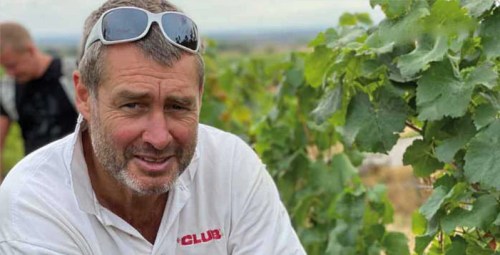
Burgundy wines are famed for their elegance and charm going back hundreds of years. But can this age-old standard-bearer for French wine learn from outsiders – and survive into the future?
Beaune, Nuits-Saint-Georges, Gevrey-Chambertin – the dinner party kudos of these famous Burgundy regions goes without saying.
But right now, it’s a struggle. Land and climate are not static – the changing weather and shifting seasons around us make that plain. And when you’re a winemaker, being unable to rely on consistent weather and soil puts all the pressure on your craft – the bit that can be controlled.
Winemakers in Burgundy are facing increasing problems with the effects of the climate emergency. More unpredictable rain, cooler summers and unusual frosts are now mixing with more slow-burn issues, like poor soil fertility and uncertain demand.
No matter how many big-name stars are swigging their wines, it can’t hide this reality.
The region’s producers have got to ask themselves something existential: can tradition continue to be a source of excellence. And if reinvention is in order, then how?
The answer lies outside of Burgundy.
Meeting Mark
Sitting in a rather cavernous function room above Vinoteca’s City of London outfit, I was offered a splash of red. It was an energetic, well crafted Coteaux Bourguignons that, at £17 or so, seemed really good value. After a few more questions – and a couple more ‘investigatory’ glasses – I learnt it was produced by an ebullient Australian called Mark Haisma.
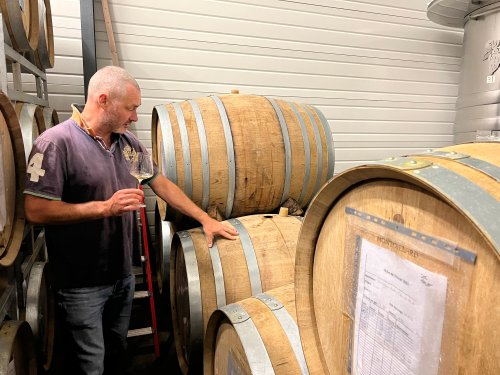
I picked up more of his other wines in the weeks following and was struck by the quality and the ‘Burgundyness’ of his Burgundy. When he started to get glowing praise in the press, I realised I would have to see what the fuss was about. To my great delight, Mark was happy to tell me all about his winemaking and we arranged a video call.
Fast-forward a fortnight and the man himself flashes onto my screen. It’s obvious how winemaking is a natural phenomenon for Mark. He’s dressed head-to-toe in pruning gear, having been working all hours to keep the spring at bay. “The sap in the vines has all gone, now that the moon is descendant,” he tells me, emphasising how even the most celestial of factors make a difference. “People should come and do some pruning with me if they say the moon has no influence on our work – it really does.”
Mark is a self-confessed philosopher of all things oenological and a real believer in Burgundy.
But that’s not where he started.
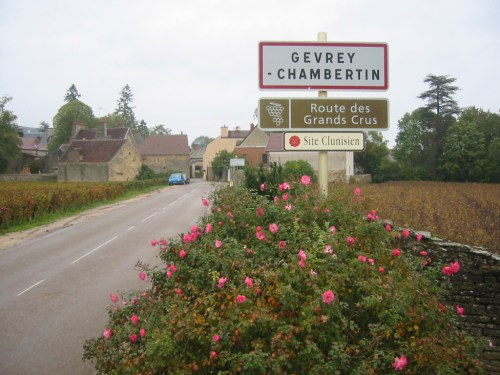
His experience making wine began back home with trailblazers Yarra Yering, under the tutelage of Dr. Bailey Carrodus. He took the plunge, setting out on his own in the late 2000s. Working as a small-time producer, or micronégociant, he found a base near the renowned village of Gevrey-Chambertin. Not a bad place to get going.
The basics of Burgundy
Nearly two decades on, the ‘Bogan in Bogandy’ (his words, not mine) has grabbed the attention of the top critics, who adore his precise, terroir-driven wine.
As helpful as they are, Mark insists he isn’t bothered by headlines. I mention his two lives as a Burgundy winemaker, both buying and growing his own grapes, and he breaks into a smile. What does it mean to him? (I’ve edited Mark’s responses for clarity.)
“Well, you’ve touched on it there. If you’re a farmer, then the results of your work are due to your efforts as a farmer. You’re at the very beginning of creating something from the ground up – in my case, literally. I love my side of the business as a négociant. I’m buying fruit from great growers, and I really dig what they do.
“But I do miss more than half the process. I’m not suggesting I can grow the grapes any better, but that connection that I have with the vineyards that I farm is important, and I really do feel a lot more connection to it that way.
“And going back to the full moon – that really drives it home to me. You’re watching the flowers. You’re watching the grasses change from one species to another. We’ve really noticed the bees and insects coming out all over the place. So, we really feel that change in the season coming in now it’s spring, coming through the vineyards where I’m buying. I’m connected to some extent, but not in the same sense as if I’d grown it.”
It’s like an adopted child, I suggest. He smiles and agrees. Getting closer to the vines is a big driver of Mark’s winemaking – I press him on the difference it makes, and his answer seems counterintuitive.
“I’m asking how I can remove myself from the equation. How does one find the humility to take the ego out of winemaking? In the beginning, when you’re starting out, you learn the mechanics and great strides can be made in your winemaking with a little effort.
“Nowadays, to increase the quality, it takes a huge effort. It’s a change to my thinking – it’s not the nuts and bolts that we’re thinking about any more. The mechanics of fermenting grape juice are pretty easy. It’s the philosophy and thought that goes into your winemaking. I think that’s where winemakers at a certain level evolve – mentally, emotionally. They ask: ‘How do I get ‘me’ out of this?’”
No beanies allowed
Many other regions are exploring a similar approach. Natural winemaking has been around for a while, with many of the wines we find now at the very least organic and many other low-intervention approaches making their way into the mainstream. I ask Mark what he thinks about this, producing in a more traditional area.
“I think there’s a great movement to make more drinkable natural wine. I probably swear too much and am a bit too grumpy to be fully accepted by the natural wine movement,” he ventures, no doubt imagining hipster tedium, compulsory beanies and chicken stock-like plonk.
Perhaps to avoid being associated with that sort of ‘funkalicious’ approach, as he diplomatically puts it, Mark doesn’t class himself as a natural winemaker. But his methods do nonetheless tally with that philosophy. “My sulfur levels remain very low and that’s the only addition to my wines. I don’t use enzymes. I don’t filter and I use minimal oak.”
Mark is convinced that this low-intervention approach doesn’t need to yield wines that are unconventional – after all, it runs in the family. “I’m constantly trying to work out how to minimise my interaction with the wine I make. All the vineyards I farm are certified organic – but I’ve been around biodynamics forever. My father was practicing biodynamics before it was even really a thing.
“There’s a place and a time for everything, and if people need the natural, organic or biodynamic status to justify what they do, and the consumer feels good about it, then great. It’s fantastic if it draws the winemaker into the vineyard, where they have to be more observant due to these things. But I’m looking for the middle ground, looking for beauty – if it’s so funkalicious that I can’t get my chops around it, then that’s not a drink and isn’t the beauty I’m after. It’s about moderation.”
Climat change
I suggest that going with nature might be all the more necessary in view of the chaotic weather – a naïve assertion, given Mark’s yearly Instagram posts about the ‘arsehole frosts’ of spring and the miserably wet summers. He knows all about reinventing his methods to keep a step ahead of this, and draws heavily on his experiences back home in Yarra Valley.
“It’s our greatest challenge. It’s a set of circumstances where it falls to me, as a grape grower and farmer, to adapt. How can we create a cooler microclimate around our vines by lifting the height of the canopies? What can our leaf and ground management achieve, so we can keep growing fruit that allows us to keep creating beautiful wine?”
Mark has taken this a step further by planting Shiraz in the southernmost tip of the region, the Mâconnais. “I’ve got the locals at the end of the vineyard asking, what is he doing? That’s just part of being someone who is willing to be different. In history, no matter what job you do, the minute you ask questions is when you can be ostracised, embraced, pushed back against – all these things. But the only way I could exist is to do things the way I do them.”
Some people might say this is a stick-in-the-mud, New versus Old World battle of values, I offer. Mark interrupts me quite firmly before I can continue.
“It’s not ‘New World.’ I think Australia has as many hang-ups as anywhere else. You know, I love the New World, I love what they’re doing, and they do push certain boundaries, but they do have hang-ups… so, it’s about asking the relevant questions that get results.”
I ask if he’s trying to change mindsets in order to secure the future of Burgundy’s smaller players. He points out what’s happened in Bordeaux, with a whole host of new varietals and experimental production being permitted as the climate gets warmer and wetter. “They absolutely ripped it up and said, ‘OK, we understand you guys are in trouble.’ That obviously doesn’t include the big names – they’re fine. But there’s a vast sea of winemakers out there struggling! They can’t make money on the fruit they grow.
They said, ‘alright, you can plant this whole set of different grapes’ – which is exciting stuff for a system as archaic as the French administration. It’s lightning years into the future and should allow them to evolve to create a sub-level of gorgeous wines.”

But why experiment with grapes outside of their natural home? What can that yield? Recent years have seen many winemakers across France struggle with high summer temperatures and rain-induced rot in the vines. Mark tells me that, in planting Shiraz and producing wines blended with the traditional varietals, Gamay and Pinot Noir, he hopes to produce wines that hark back to the lower alcohol levels of fifty years prior.
“There’s been a resistance,” he tells me, banging his fist on the desk, “to years like 2018, when certain great names in Burgundy have pumped out dross – ‘bretty’ rocket fuel with residual sugar. They’ve got a good name and they can flog it onto the market. That’s an absolute disgrace; they should be ashamed and embarrassed at that.” The fist thumps on the table once more. For Mark, it’s about getting the basics right through careful management and proximity to the grapes.
A golden era
I ask him if this means complete reinvention of the region’s winemaking methods. With a wry smile, he asks me a question back. “Are we not in a golden era in Burgundy?” A silence follows, as I consider what he’s getting at. Mark breaks the contemplation with an answer.
“If we think about it, are we not – with this better thinking, better management – able to create some vintages that are consistently delightful? Was that happening fifty or sixty years ago? I don’t think so. You might say that 2018 is not your style but the folks that picked right and got the tension in their wines have made some gorgeous, gorgeous stuff.
“2018 through to 2022 – I actually love every one of them. Let’s go back fifty years and try to find five vintages in a row where you’re thinking, oh yeah, no problems. The people who are aware and ready to react, and to work super hard in managing that opulence and alcoholic level and power, are right at the top of the game.”
Mark really sees the future of Burgundy in its community: hearts and minds in the smaller properties embracing future-proofed methods of making quality wines, whether that is with classical blends or using the renewed influence of outside varietals to showcase the terroir. His love of the region shines through when I ask him to sum up Burgundy today.
“If the wine that comes out of Burgundy is clumsy and rotten, then it’s a simple equation: the thought just hasn’t gone into it. We have such high prices here. If we can’t put out wine from across Burgundy that is delicious, then we need to get out of the game. How can you have the arrogance to charge those prices when the wine isn’t fun?
“We are farmers with philosophical thinking about our work. We are primary producers transforming from the ground up, creating something from nothing. The wines of Burgundy are made by people who have a real passion – and if they don’t grow it themselves, they have a connection to the people who do.”
You can register for Mark’s new releases through his website; for a full list of stockists where you are, click ‘Merchants and Importers’.


Leave a Reply